Nose — How To Judge Air Flow & Resistance So You Can Live A Normal Life
Harry Kunelis DDS
Nose breathing test is useful to evaluate the nose while it’s at work. It is a functional test. The test is performed with the mouth closed, and normal breaths thru the nose. The fancy name for this test is rhinomanometry.
R = P / F
The measure of rhinomanometry or nasal airway resistance depends on measuring nasal air flow and the pressure producing that airflow. Which means any decline in air flow thru the tube, results in higher nasal resistance.
Baseline nasal reading
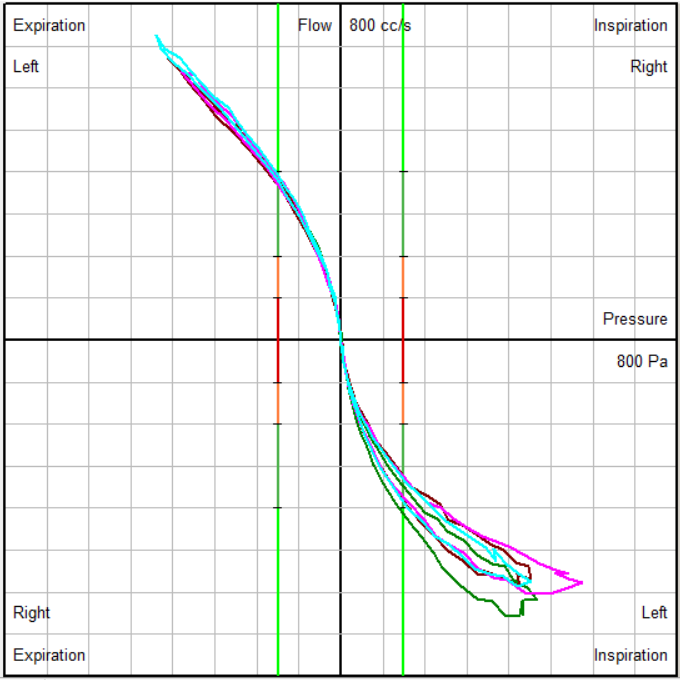
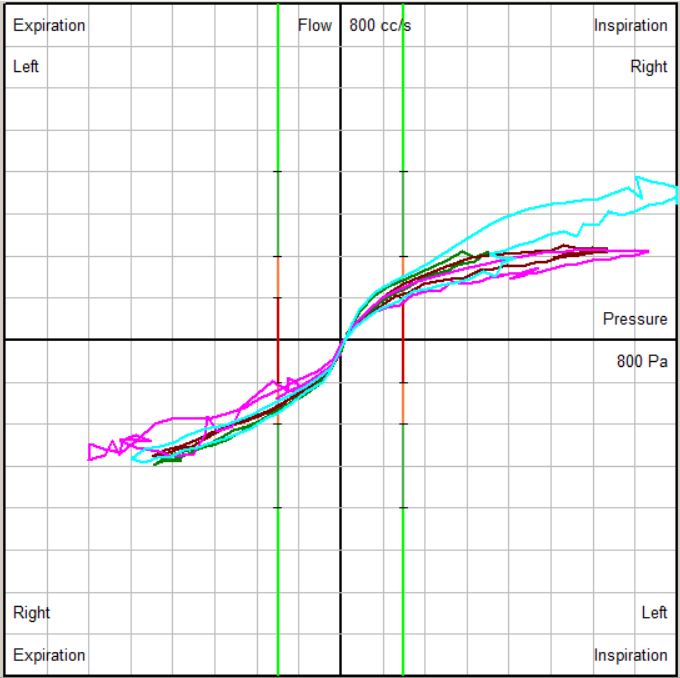
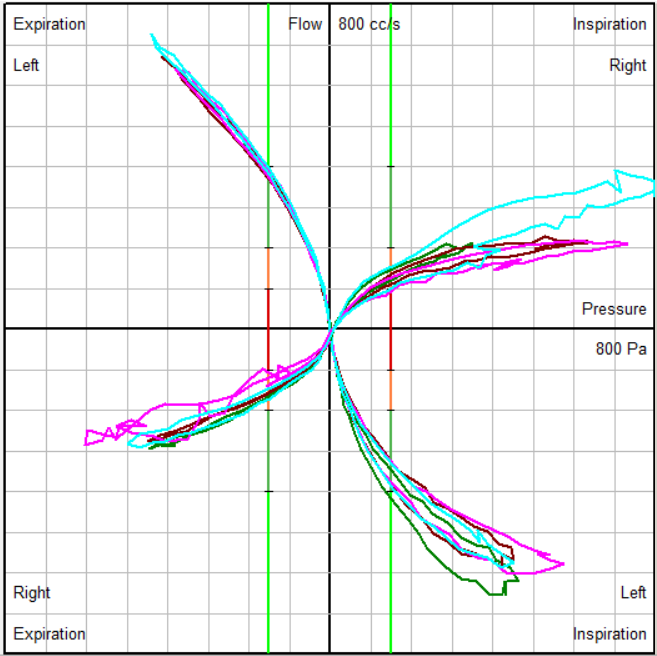
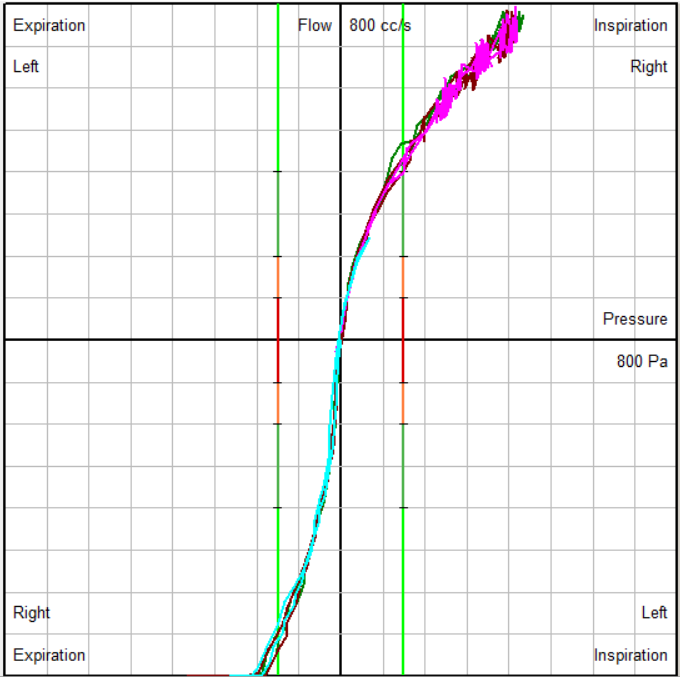
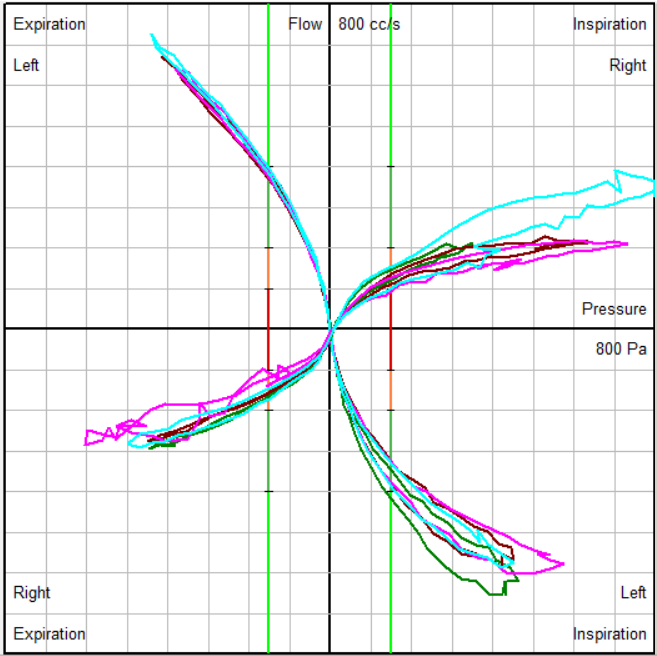
Left nostril:Here above is a baseline measurement of the left nostril. Notice the wavy line crosses the vertical-railroad-tracks at dark green level. Inhale & exhale.Right Nostril:Here is a baseline reading of the right nostril. Notice the wavy line crosses the vertical-railroad-tracks in the orange level (near red level). Both on inspiration (breathing in) and on expiration (breathing out). Patient’s deviated septum is causing massive air flow decline, and high resistance. Not good.Baseline measurement complete view showing right and left nostrils together. Airflow thru right nostril is really bad: nasal inhale and nasal exhale (not good).
Insert Max-Air Sinus Cones
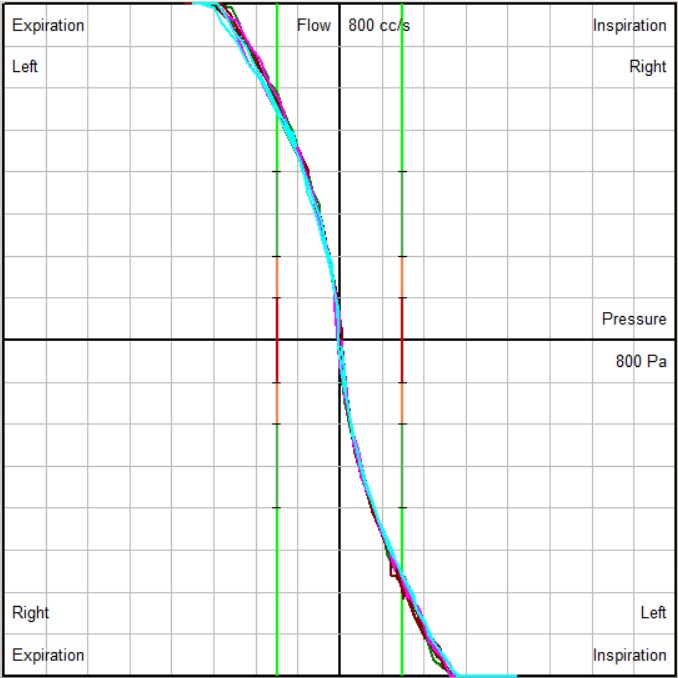
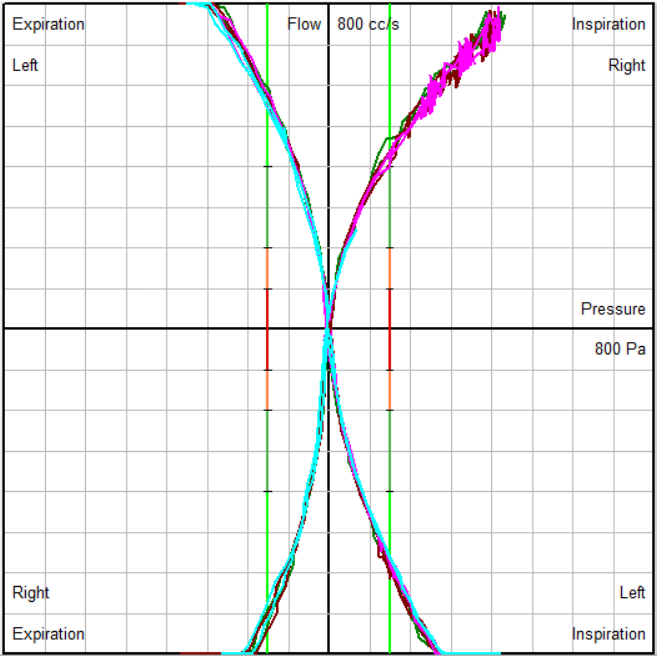
Left nostril flow reading after medium size sinus cone (by Max-Air) was inserted. Notice the wavy line crosses the vertical-railroad-tracks at the bright-green level. Max-Air sinus nose cone improved left nostril breathing.Right nostril flow reading after medium size sinus cone (by Max-Air) was fitted. Notice the improvement in air flow when compared to baseline. And with an even greater benefit on the expiration (breathing out) nose phase.Full viewmeasurement (right & left nostrils) with Max-Air nose cones inserted.
Before & After Comparison
Before (left image)is the baseline reading. After (right image)is reading with Max-Air medium size nose cone fitted. Notice two key findings after sinus cone is inserted (image on right) to open nasal blockage: (1) the wavy lines get oriented more vertical for each nostril and cross the vertical-railroad-tracks bright green levels, indicating improved air flow for both nostrils when compared to the baseline and (2) the right nostril shows significant air flow improvement with Max-Air nose cones, especially on nasal expiration (breathing out).
Plan: Referral to ENT surgeon for nasal septum (structural!) correction is needed in order for this person to be able to breathe.
Summary
Ideally, the flow lines for the left and right nostrils should appear as vertical as possible. And to cross the vertical-railroad-tracks near the ends of the bright green levels (aka. lines to stand in a vertical “up-and-down” pattern).
But when the flow lines cross the vertical-railroad-tracks at the orange or red levels (leaning in a more horizontal look) it means a big breathing problem.
In this case study above, the baseline reading shows significant nasal resistance in the right nostril. Which means this person cannot breathe life thru their right nostril.